Vehicleref
Vehicles
MakesTypesYearsCountries
Map
MakesRace TracksGame StudiosTV Networks
Showcase
Race Tracks
TV Shows
Games
YouTube
People
FoundersOwners

Vehicles

  • Makes
  • Types
  • Years
  • Countries

Map

  • Makes
  • Race Tracks
  • Game Studios
  • TV Networks

Showcase

  • Race Tracks
  • TV Shows
  • Games
  • YouTube

People

  • Founders
  • Owners

© 2026 Vehicleref. All rights reserved.

Previous
Next

DKW

View all DKW vehicles
Germany flag
Germany

1916 – 1966

50 years
AntiqueClassicModernConcept
1875194019902027
Vehicles
1
7

Vehicle types

  • Convertible21
  • Sedan19
  • Pickup7
1

Fuel types

  • Gasoline57

Also known as

1
  • Dampf-Kraft-Wagen

Links

Company overview

DKW was a German car and motorcycle manufacturer established in 1916. Jørgen Skafte Rasmussen founded the company with the goal of producing steam fittings, and later attempted to build a steam car. The acronym DKW originated from the name of his first toy engine, ‘das kleine Wunder’ (the little wonder). By the late 1920s, DKW became the world’s largest motorcycle manufacturer. In 1932, DKW merged with Audi, Horch and Wanderer to form Auto Union. Following World War II, DKW moved to West Germany. The company produced a series of inexpensive cars from 1931 to 1942, including the F series, which were among Europe’s first volume-produced cars with front wheel drive. DKW continued to build vehicles under license in Brazil and Argentina until 1967 and 1969, respectively. In 1957, Auto Union acquired DKW, and in 1964, Volkswagen Group purchased Auto Union. The last German-built DKW car was the F102, produced until 1966. After World War II, DKW was rebuilt in East Germany and then assembled under license in Brazil and Argentina. In 1956, DKW began producing the V6 engine, which was later used in the Munga and F102. Production ceased in 1966 with the introduction of the Audi F103. DKW-Vemag produced approximately 109,343 vehicles in Brazil before Volkswagen took over production in 1967. In Denmark, DKW cars were assembled locally by Christian Bohnstedt-Petersen, utilizing imported chassis and bodies. DKW vehicles were also produced in Argentina by IASF S.A., and in Switzerland by Holka AG.

Places & identity

Headquarters and emblems

Headquarters image coming soon

An architectural or archival image of DKW's headquarters will appear here.

Image placeholder

Full address

DKW

Zschopau, Saxony

Germany

Visual history

Emblem history

4
  1. 4
    DKW emblem

    1949–1966

    1 vehicle
  2. 3
    DKW emblem

    1932–1948

    0 vehicles
  3. 2
    DKW emblem

    1921–1931

    0 vehicles
  4. 1
    DKW emblem

    1916–1920

    0 vehicles
Browse all 41 vehicles, 1928–1968

Ownership and lineage

Related makes

1

Lineage timeline

Operating spans for predecessor, current, and successor makes.

1916–1969
19161929194319561969
Auto Union emblemAuto Union1933–1969
DKW emblemDKW1916–1966
1966 · Successor

DKW16 models

Discontinued16

View all
Image
Coming soon
F1
1931–1932
—
15 - 18 hp—
Image
Coming soon
F2
1932–1935
—
15 - 20 hp—
Image
Coming soon
F4
1934–1935
—
20 hp—
Image
Coming soon
F5
1935–1937
—
18 - 20 hp—
Image
Coming soon
F7
1937–1938
—
18 - 20 hp—
Image
Coming soon
F8
1939–1950
—
18 - 20 hp—
Image
Coming soon
F9
1939
—
29 hp—
Image
Coming soon
F10
1949–1950
—
20 hp—
Image
Coming soon
F19
———————
Image
Coming soon
F89
1950–1954
—
+1
23 hp—
Image
Coming soon
F102
1964–1966
—
60 - 83 hp—
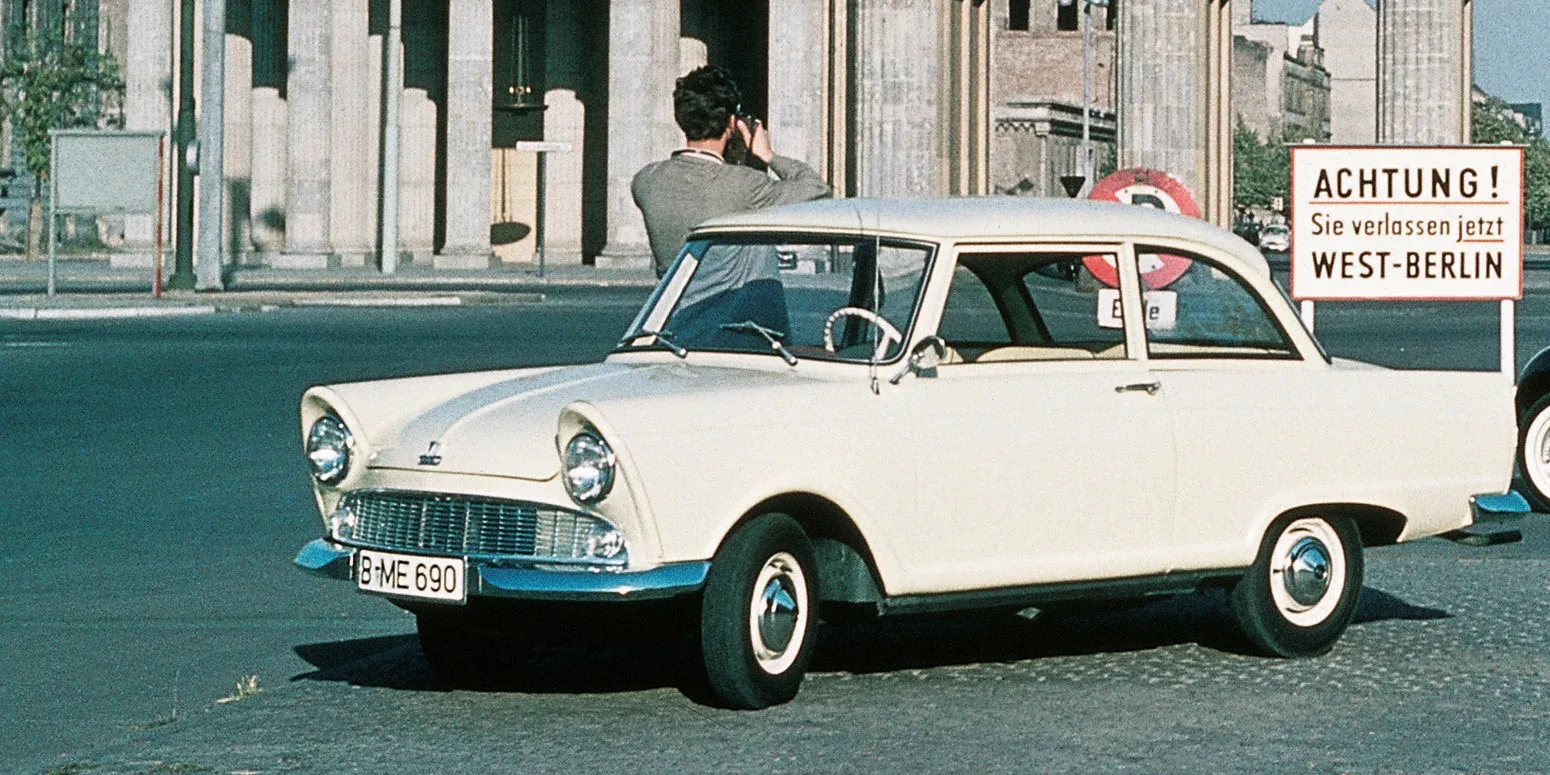
Junior
1959–1965
—
34 - 45 hp—
Image
Coming soon
Munga
1956–1968
—
40 - 44 hp—
Image
Coming soon
P 15
1928–1931
—
15 hp—
Image
Coming soon
Schnellaster
1949–1962
—
20 - 32 hp—
Image
Coming soon
3=6
1953–1959
—
+1
34 - 56 hp—